anisfariza.mdpazil@xmu.edu.my
anisfariza.mdpazil@xmu.edu.my
CST309, Computer Networks and Communication, For Lab
AIT) Group 1 and Group 2
Lecturer Email Address: farhanhanis.muhmadasri@xmu.edu.my
This course covers advanced and latest research issues in Natural Language Processing, including Sentiment Analysis, Topic Modeling, Text Clustering, Text Classification, Information Extraction, Dialogue Systems, Question Answering, Summarization, Text Generation, Knowledge Graphs, and Machine Translation. The discussion of these advanced topics will include some of the latest pre-trained models, such as BERT, Hugging Face, GPT, and ChatGPT.
This course covers the fundamentals of software development, software process models, software system design, large-scale software system development, and software development environments. This course will focus on using Unified Modeling Language (UML) to perform analysis and design for Software System.
Hi,
I am teaching ERA124 this trimester. Kindly grant course access in Moodle for my students and me. Thank you.
regards,
Dr.Hew
ERA124 lecturer 2026/2027 T2
Statistical Learning, AIT302
keting.chong@xmu.edu.my
Python Programming Language, BSC135
keting.chong@xmu.edu.my
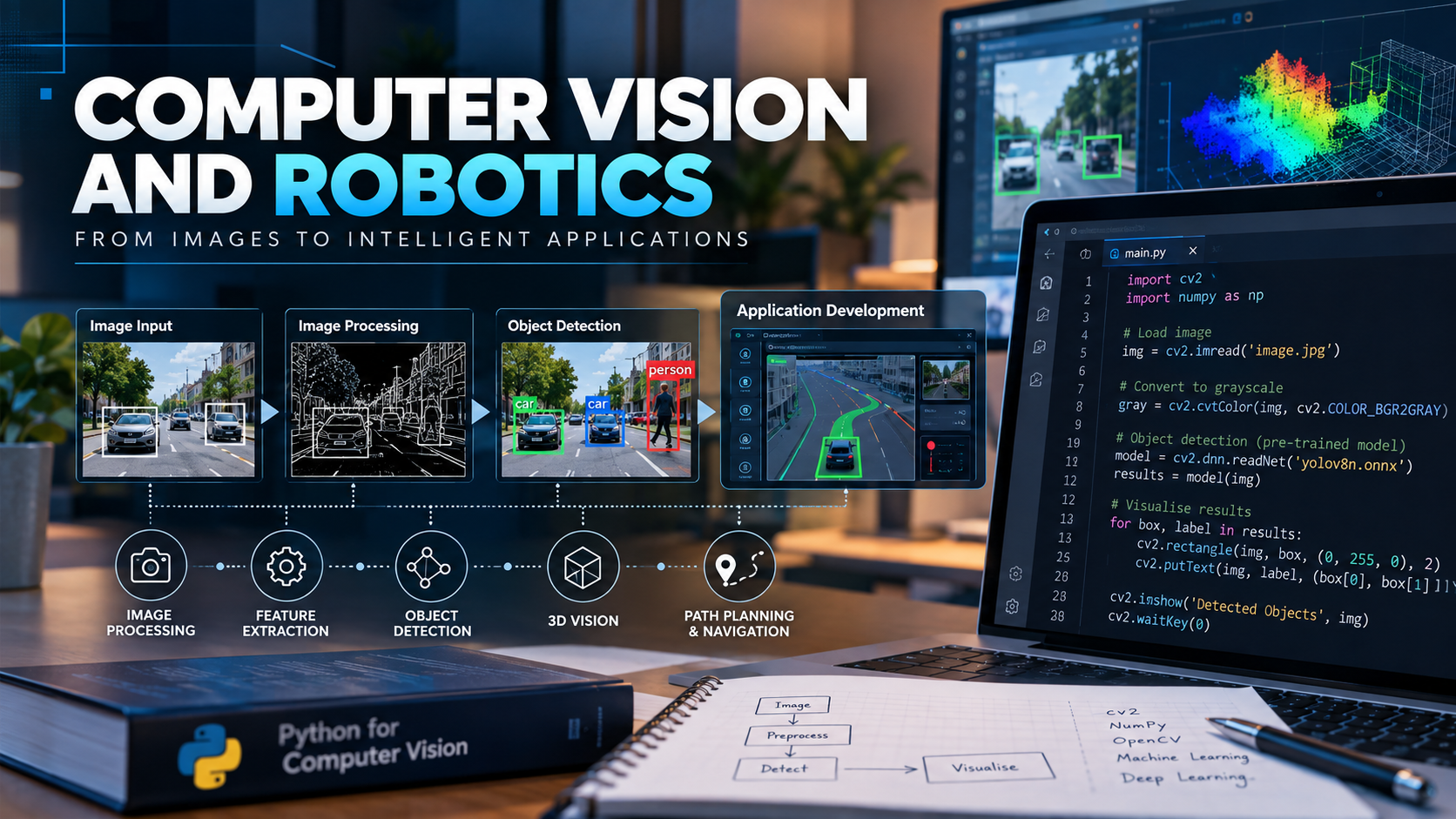
This unit introduces students to the fundamental concepts and practical applications of computer vision and robotics, progressing from basic image processing and digital image representation to advanced topics such as image enhancement, colour processing, edge detection, stereo vision, pattern matching, object detection, 3D vision, human–robot interaction, path planning, and robot navigation using deep learning. Students develop practical problem-solving skills through assignments, quizzes, and project-based activities, applying computer vision and robotics concepts using Python.
This course provides a thorough introduction to the Python programming language. It will cover the basic syntax and grammar and expose students to practical programming techniques. Besides, this course offers the students about programming and application of NumPy and Tensorflow, which are the necessary tools for intelligence systems. More importantly, the students should be prepared to work in Linux environment.
This course demonstrates the mathematic foundations of deep learning, based on which, exhaustive deep learning principles are lectured, including feed-forward neural network, regularization, optimization, convolution neural network, and sequence modeling. This is followed by deep learning application of basic methods into computer vision and natural language processing. Besides, with teamwork and communication skills, the students are required to implement a framework of computational graphs such as Tensorflow and PyTorch.